
Sixteen years after The Social Network, the film that told the birth of Facebook, transforming it into one of the great dark myths of the digital age, history is knocking on Mark Zuckerberg’s door again. But this time we are no longer talking only about ambition, brilliant intuitions and friendships sacrificed on the altar of power. With The Social Reckoning, the thematic sequel written and directed by Aaron Sorkin, the Facebook empire ideally ends up in the dock: at the center there is no longer the construction of a technological revolution, but the moment in which that same revolution is called to answer for its consequences.
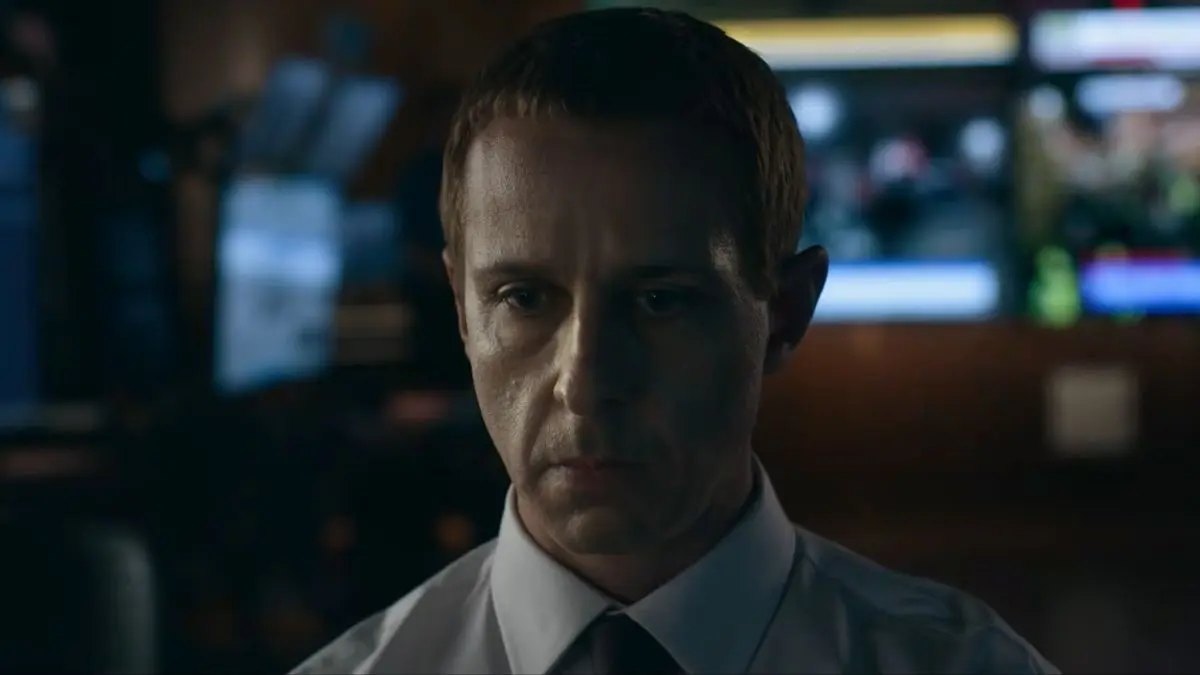
The trailer for the film offers the first real look at Jeremy Strong as Zuckerberg, a role that in 2010 was played by Jesse Eisenberg in the film directed by David Fincher. A passing of the baton that is anything but secondary, because The Social Reckoning seems to want to show a different face of the founder of Facebook: no longer the young programmer who conquers Harvard and then the world, but the man at the helm of a platform that has become a global force, accused of having profoundly affected the public debate, the circulation of information and the lives of millions of users.
The film will hit theaters on October 9, 2026 and marks Sorkin’s return to the narrative universe that earned him the Oscar for Best Adapted Screenplay. This time, however, the author also signs the direction, picking up the legacy of The Social Network and moving the story to a much more recent and controversial phase in the history of Facebook. The Social Reckoning is in fact not presented as a traditional sequel, but as a thematic sequel: a new cinematic investigation into the power of the platform, its gray areas and the responsibilities that emerged after years of seemingly unstoppable growth.
At the center of the plot are the so-called Facebook Files, the series of documents and revelations that in 2021 ignited a new front of accusations around the social network. The story will follow Frances Haugen, a former Facebook engineer played by Oscar winner Mikey Madison, and Jeff Horwitz, a journalist for the Wall Street Journal who will be played by Jeremy Allen White. Together, the two will bring to light internal information intended to raise very serious questions about the functioning of the platform, the amplification of misinformation, the role of divisive content and the effects of social media on the mental health of children and adolescents. Alongside Strong, Madison and White, the cast also includes Bill Burr, while the production is entrusted to Sorkin himself along with Todd Black, Peter Rice and Stuart Besser.
The author’s return to this subject does not seem dictated by nostalgia, but by the need to complete a discourse that has inevitably remained open. When The Social Network came out in 2010, Facebook was already a giant, but it had not yet taken on the political, social and cultural weight it would have in the following years. Today, however, the story can no longer be limited to the birth of an idea: it must come to terms with what that idea has become. Sorkin himself explained the meaning of this return with very clear words: “There is not a life that the Facebook algorithm has not touched, and that influence has shaped everything. So it’s time to say more.” A statement that also seems to work as a manifesto for the film, determined to transform an industrial and journalistic story into a great contemporary drama on the power of technology.
With The Social Network, Fincher and Sorkin had signed one of the sharpest portraits of Silicon Valley, capable of obtaining eight Oscar nominations and three statuettes. With The Social Reckoning, the story starts again from a much more uncomfortable point: no longer the rise of Facebook, but its symbolic process. And the trailer hints that, this time, the question will not be how Zuckerberg’s empire was born, but how much it cost the whole world.
