
Science fiction continues to be one of the most beloved genres by television audiences, capable of continuously reinventing itself through stories ranging from the most disturbing dystopias to the most ambitious futuristic tales.
If in the past the small screen has given rise to series that have become authentic pillars of pop culture, in recent years the genre is experiencing a new golden age thanks to streaming platforms, which are increasingly investing in high-level productions. Among these, one of the most talked about surprises of recent times continues to dominate the Apple TV+ charts despite the fact that several months have passed since its release.
We are talking about Pluribus, the series created by Vince Gilligan, an author who certainly needs no introduction after signing two of the most acclaimed productions on modern television. Since its announcement, the project had attracted enormous attention precisely because of Gilligan’s involvement, but few would have imagined such a significant impact on the platform’s audience.Before its arrival, the most-watched sci-fi series title in the history of Apple TV+ belonged to Severance, one of the most important television phenomena of recent years. The debut of Pluribus, however, quickly changed the balance, managing to conquer millions of spectators and establish itself as one of the flagship productions in the catalog.
Also contributing to the success of the series was the cast, led by Rhea Seehorn, already beloved by the public for her work in Better Call Saul, where her performance was enthusiastically received by critics and viewers, further consolidating the reputation of a production that since its debut has been accompanied by extremely positive reviews.
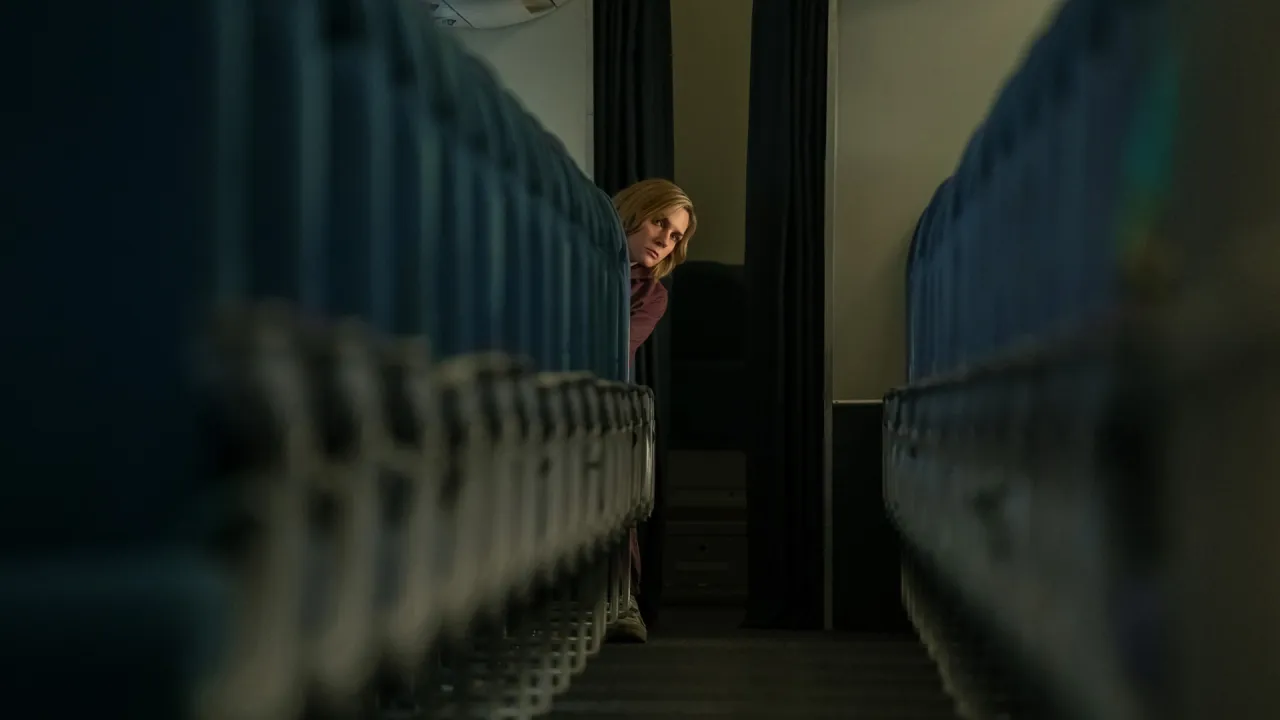
The plot takes viewers to a reality as fascinating as it is disturbing where in a world suddenly overwhelmed by a mysterious epidemic of artificial happiness, the protagonist Carol Sturka finds herself among the very few people left immune to the phenomenon. While the rest of humanity seems to abandon themselves to a state of collective bliss, Carol begins to investigate the origins of what is happening, discovering that behind that apparent perfection there could be something much darker and more dangerous.
The idea of a society deprived of free will in the name of absolute happiness is one of the central themes of the series, which uses science fiction to address deep questions related to human nature, social control and the value of authentic emotions. The numbers speak for themselves with the first season it obtained an impressive 99% approval rating from critics on Rotten Tomatoes, a result that places it among the most popular television series of recent years. More divisive, however, is the judgment of the public, stuck at 67%, a sign that the more reflective and less frenetic pace compared to other Apple TV+ sci-fi productions has not convinced all viewers.
Apple has already confirmed the renewal for a second season of Pluribus, news that has been enthusiastically received by fans, but rumors suggest that the wait could be quite long before we can return to the Pluribus universe. In the meantime, the series continues to steadily occupy the top positions of the platform’s streaming charts, confirming how the phenomenon is far from exhausted and demonstrating once again how science fiction is one of the most popular genres.
