
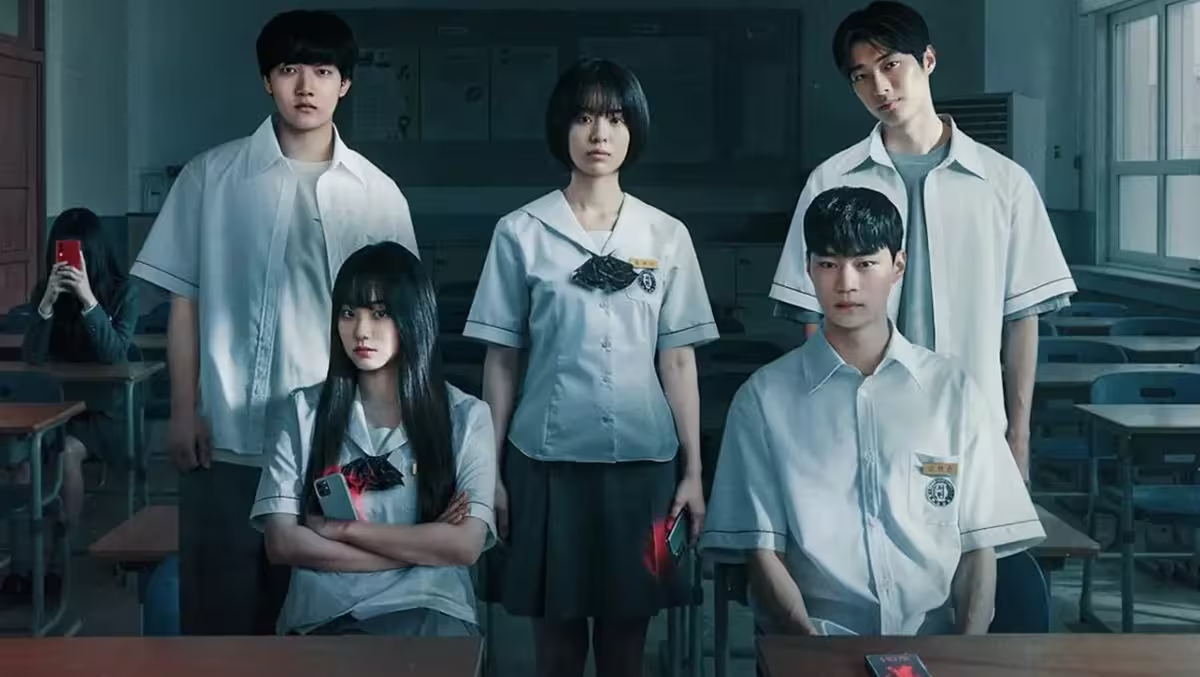
Seoul’s Seorin High School is apparently a high school like many others, with its implicit hierarchies, its façade friendships and its poorly kept secrets. If Wishes Could Kill stars five friends, struggling with something much bigger than themselves. Yoo Se-ah is a promising long jumper who has a secret relationship with her partner and neighbor, Kim Geon-woo; his friend Lim Na-ri has also set her eyes on him, while Kang Ha-joon has a crush on Yoo Se-ah. Finally, there is Choi Hyeong-wook, the nerd of the group and the first to come across the mysterious app that will kick off the events.
Girigo, a smartphone app that allows you to make a wish by sending a special video. Too bad that every wish fulfilled triggers a countdown on the phone, which at the end of the countdown causes the death of the user in violent circumstances: Choi Hyeong-wook takes his own life during a lesson, cutting his throat with a cutter. It will be up to the others to stop the curse before it is too late, also because in the meantime further wishes had been requested, when the tragic consequences to come were still unknown.
If Wishes Could Kill – is a Korean term that belongs to the formal and funeral register: it means to honor the memory of the dead, to celebrate their virtues with that deference that is reserved for those who are no longer with us.
In the economy of the series, it works like a real linguistic trap, since the app that bears that name promises to make the wishes of the living come true, but those who download and use it paradoxically have their fate already sealed. Series that looks at a typically oriental vision of horror, starting with that school setting that is so reminiscent of the Japanese genre and those curses that spread among the youngest, in the wake of the numerous teen productions coming from all latitudes. The screenplay delves into the often thorny territory of adolescence, with that mix of desire for new experiences and first loves that is soon consumed by guilt, jealousy and violence, with a rawness that the genre rarely grants on screen.
Between teenage horror and staging
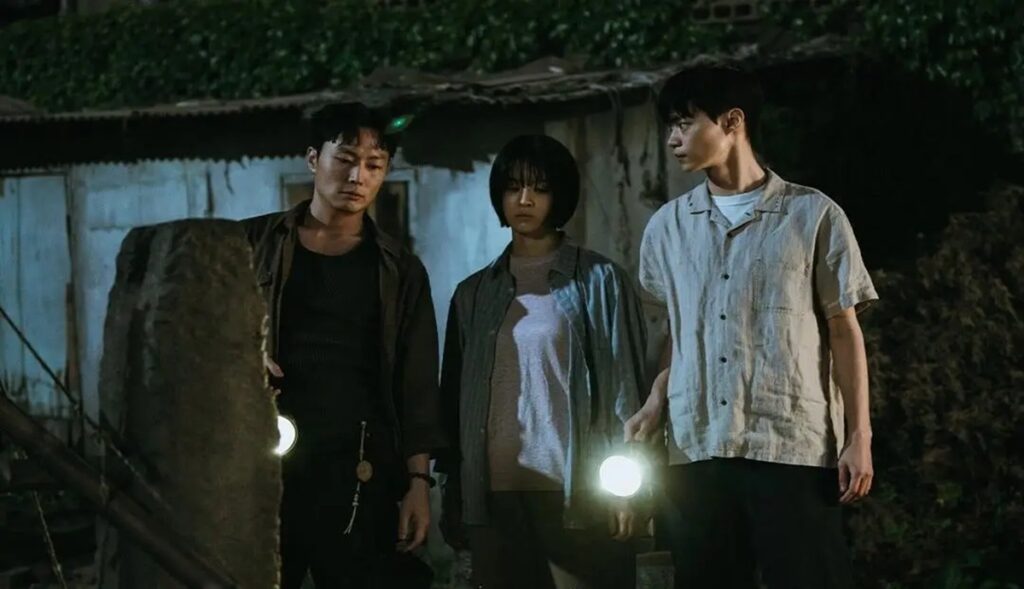
Where Girigo convinces is in it’s ability not to be reduced to the simple reiteration of the mechanism, but to try to vary the basic premise with new ideas and characters, remaining at that triggering incipit and explained, as now often happens in serial productions, in the inevitable prequel episode towards the season finale. There is no classic puzzle logic, or rather it is reshaped in not making the curse unleashed by the app solely central, which is not the subject of the story but its actual catalyst.
Desire is exploited here as an x-ray of adolescence, on how much boys are willing to sacrifice to get what they want. And as a whole, the eight total episodes, with variable duration – ranging from 35 to 55 minutes with uneven leaps – work fairly well on a narrative level, even if some solutions appear partially forced. In fact, the core of the main characters lives on dynamics that seem to be conveyed, between secret crushes and lurking betrayals, and this takes away that pinch of naturalness from a story that should have focused with greater incisiveness and finesse on the psychology of its protagonists, faced with something horrible and with no apparent way out.
Where the operation finds its main reason for being is in the staging, in the unfiltered representation of horror, which is not sweetened. Blood, mangled bodies, endless and dark corridors, dangers lurking around every corner: while never being totally disturbing, the grand guignol verve is tasty at the right point, being able to count on special effects and well-made make-up. The jump-scares play with the imagery cleared by j-horror, without ever giving in to the sudden scare for free but working the right way in the construction of fear and atmosphere, producing a genuine and lasting discomfort when it is the tea that takes over.
“If Wishes Could Kill” is much more than the apparently linear synopsis suggests, even if not everything is perfect. Desire as a mirror of a complicated adolescence, with easy results that go hand in hand with a price to pay, the result of a curse that has its roots in the Korean folkloristic and spiritual tradition, with shamanism as a central element to stop that apparently unstoppable trail of death. A blood-colored damnation, which runs on the connection of a phone that becomes the guardian of death to come, with the timer indicating the fatal countdown as a warning for the unfortunate protagonists, forced to find a way out before their last hour arrives. Violence and adolescence in a series with enjoyable horror hues, which convinces from a visual point of view and in the management of the atmosphere except for showing some cracks in the characterization, all too schematic, of the unfortunate characters.
